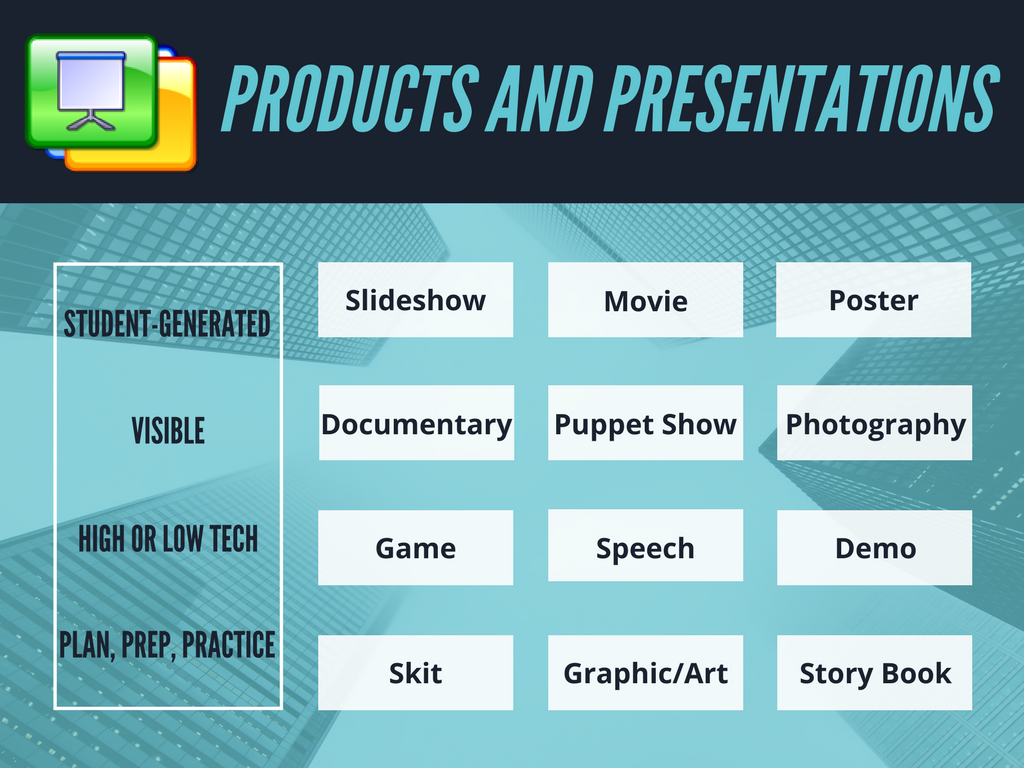
The results of Genius Hour extend far beyond a final presentation. Students will experience the inquiry process, develop 21st century skills, discover a new or renewed passion for learning, and become lifelong learners who are eager to explore the world. Nonetheless, a culminating product is a major component of passion-based learning and rightly so. It gives students the opportunity to demonstrate their learning and share their passions with an audience. Students will want to construct new knowledge and exhibit new skills. Genius Hour projects are not limited to the standard slideshow presentation. The possibilities are endless.

Final Products Are Only The Beginning
|
Spark your students’ desire for creating a final Genius Hour presentation early in the process. You might want to show students examples of passion projects on YouTube or social media (#GeniusHour). Be sure to encourage students to think about new alternatives for demonstrating their learning and sharing their talents. If the presentation method is visible, it’s acceptable.
“This kind of work is also often iterative–done in stages, with drafts, revisions, collaboration, and rethinking. It’s design work, and as design work, it gives students a chance to show what they know.” -44 Diverse Tools to Publish Student Work by Teach Thought |
|
Special Delivery! Passions and Talents
Final presentations are an exciting part of Genius Hour. Students’ delivery of the final project takes a lot of preparation and practice. One method for students to share their projects is a TED-style speech. TED Talks are delivered without notes, from memory. They are scripted and carefully rehearsed giving students an opportunity to practice writing and communication skills. Are you worried about shy students who cringe at the thought of public speaking? Another delivery option is for students to prepare a TED Talk and pre-record using video or a voice recorder app.

A tip from The Genius Hour Guidebook to schedule presentations is for students to sign up for one, two, or three 5-minute slots. This way, presentations are at least five minutes long but no more than 15. Most importantly, students get a choice.
Inspire your students by viewing popular TED-style speeches. Watch this short TED Talk from Thomas Suarez, a 12-year-old app developer. |
|
An invaluable resource to perfecting the final presentation are students' peers. Plan time for students to receive feedback on their presentations from fellow classmates. Do not expect students to be natural experts at giving feedback. This is a skill, and an important one at that. Model for students the process and what effective feedback looks like: praises, questions, and constructive criticisms. Explore a variety of possibilities for how students share their projects with others. Each student is different and each has a unique voice. Let them use that voice when deciding the format and style of their final products.
Showcase Projects
|
After a movie crew spends months filming and editing, they have a major premiere (or several) to share their work. On the night of the film’s first public screening, actors, producers, and the production team stroll down a red carpet with fans and paparazzi on both sides trying to catch glimpses of the stars. If this much attention is spent on celebrities and artists for their hard work, shouldn’t we do the same for students' Genius Hour projects? You don’t have to roll out a red carpet before students present their passion projects, but you could.
|

|
|
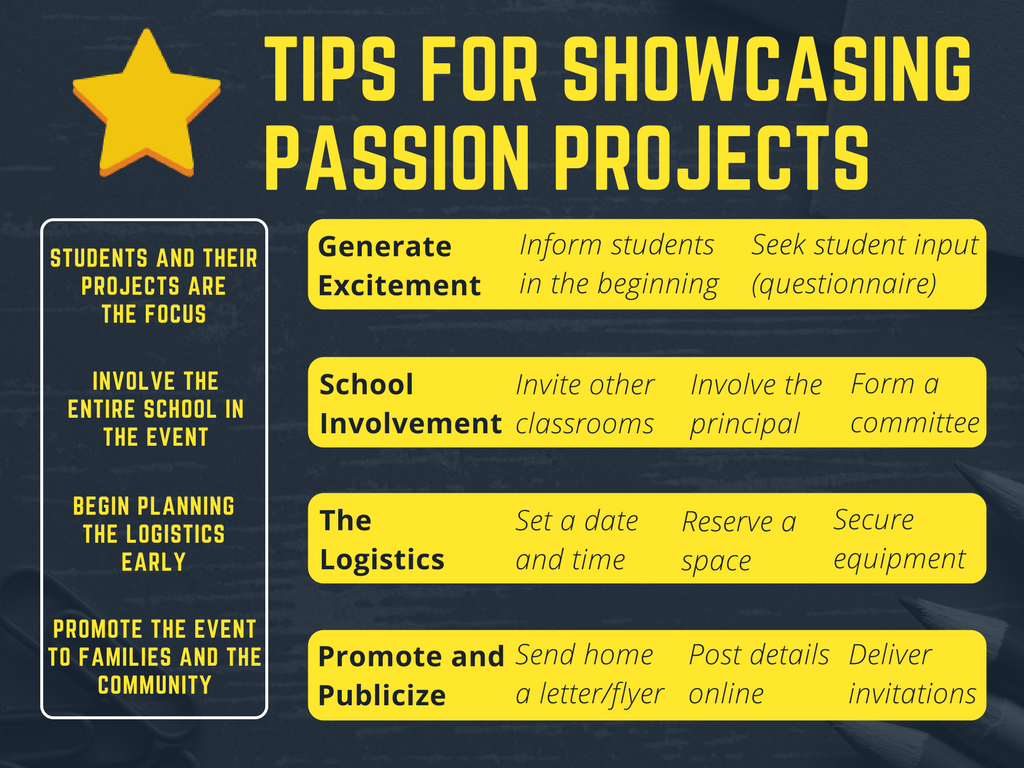
In addition to students delivering their final products to the class, many schools display students’ passion projects at a special event. These showcases can be organized during the school day or at night. The goal is to get as many family members, stakeholders, and community members to attend as possible. Promote the showcase as something special, which it is! There is no wrong way to plan an event where students are the stars and their work is the main attraction. With each event you host, you will learn what do differently in the future. Your efforts in highlighting students’ Genius Hour projects will not go unnoticed. Your students and their families will remember such an event as a pinnacle of the school term.
|
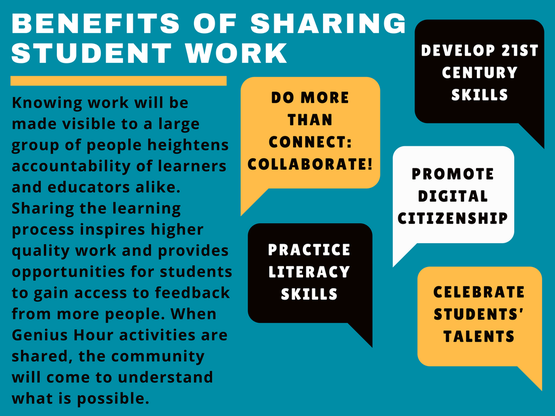
Sharing is CaringSharing results is a key element in the learning process. When students share Genius Hour passion projects, it sends a positive message to the rest of the world. It conveys that students' education is more than memorizing facts and duplicating equations. Students learn best when they apply those facts and utilize those equations to construct new knowledge and present learning to an audience. Show how much you and your students care about their learning and their passion projects by sharing it with others. Do not wait until the end of Genius Hour to share student work with stakeholders. The process is just as important as the conclusion. There are many benefits to sharing the progress of passion projects from the beginning to the end. Sharing helps students keep track of their learning, receive feedback, and it increases motivation and student ownership.
|
|
There are a number of tools and methods for sharing student work online. Learn about respecting students' privacy by reading
Protecting Student Privacy on Social Media: Do's and Don'ts for Teachers from Common Sense Education.